
If you have trees in your yard, you've likely dealt with pesky tree roots creeping into your lawn and creating lumps and bumps in the grass. While trees provide wonderful shade and curb appeal, their spreading roots can wreak havoc on your lawn.
The good news is with some strategic digging and cutting, you can remove those troublesome roots without harming the tree.
So, how to remove tree roots from lawn? To remove tree roots from your lawn without harming the tree, cut a trench around the root zone, sever and extract small roots within the trench, drill and cut larger roots, replace the soil, improve drainage, and install a root barrier to protect against future invasion.
Here's more tips on how to nip the problem in the bud (tree pun intended!).
Is it OK to remove tree roots from lawn? Yes! But before you start hacking away, you need to find out where the roots are. Examine your lawn to spot any raised areas or depressions - those are signs of roots underneath. You can also use a probe, like a thin screwdriver, to poke around in the soil. When you hit a root, the probe will stop moving easily, and you'll feel resistance.
Make sure to probe deeply - large tree roots can grow over 2 feet down. Mark areas where you find roots so you know where to dig.
Now comes the fun part. Time to get digging! What is the best tool to remove tree roots? Use a flat shovel to cut a trench around the marked root area, about 2-3 feet from the trunk. Dig the trench about 6 inches wide and 2 feet deep.
This creates a barrier to prevent new roots from invading your lawn. Think of it like building a mini-moat around your castle to fend off enemies. Except in this case, the enemies are roots, not medieval invaders.
With the trench dug, you can now start exposing and severing the small feeder roots. Use your probe or a hand trowel to gently uncover shallow roots within the trench. Use loppers, pruners, or a saw to cut the roots - just be sure not to snap or tear them, as that can damage the tree.
Cleanly cut roots can be removed. Follow each root as far as possible and remove it back to the trench line. Take your time and be meticulous to get out as much as you can.
For thick roots over 1 inch diameter, you'll need to take an extra step. Use a drill to bore holes through the root, then use a saw to cut between the holes. This helps sever the root without shattering it.
Drill holes about 6 inches apart and cut out those sections. Again, follow the root as far as the trench and remove everything back to the line. This takes patience, but it's worth it for healthy lawn and tree.

With the roots gone, replace the soil and tamp it down firmly. Water well to settle it further. Adding a few inches of fresh topsoil will give grass a boost, too.
Improve drainage by grading the soil to slope slightly away from the tree. Aerate compacted areas and fill in low spots. This encourages water to flow away from the root zone.
For recurring root problems, install a permanent subsurface root barrier around the perimeter of the root trench. Plastic, metal or woven fabric barriers deflect roots down and away from your lawn.
Barriers should be at least 30 inches deep to be effective. This optional step provides enhanced protection from regenerating roots.
Your root trench is like a protective moat that needs occasional maintenance. Expect to redo it every 3-5 years as roots regrow. Spot treat any new invasions quickly to keep your lawn pristine.
A yearly application of copper sulfate around the root zone may help deter future root growth. Be sure to water, fertilize, and aerate your lawn regularly for lush, healthy grass that can resist root encroachment.
While DIY root removal is possible in many cases, some situations call for professional help:
Arborists have specialized tools and expertise to handle extensive root pruning around mature trees or tricky removal jobs near structures. Their services are worth the investment for valuable heirloom trees.

While hacking away at roots in your lawn, don't forget the tree's needs, too. Limit pruning to the minimum amount necessary and avoid damaging the main buttress roots near the trunk.
Leave as much of the root system intact as possible for the tree's health. And don't worry - you aren't going to kill a mature tree by carefully removing some of its small feeding roots. Just don't get carried away and go root crazy!
If you decide total root removal is too extreme, consider alternatives like:
Sometimes, you just have to admit you'll never entirely kicked those roots out of the yard. The tree was there first, after all! With a bit of flexibility, you can usually find a way to coexist happily.
I hope these tips help you banish pesky tree roots from your lawn or at least reach a root détente. With care for both trees and turf, you can maintain a lush, healthy lawn without extreme root removal. And you can rest easy knowing your yard is in harmony. Well, until the leaves start falling anyway…
So sharpen your shovel, grab your loppers, and get ready to declare battle on those roots! Just don't get root rage and go overboard. With some strategic digging and cutting, you'll restore order and give your grass room to grow.
Your lawn and trees will thank you for finding that delicate balance between lush lawn and healthy roots. And you'll be thankful for not having to trip over underground obstacles next time you push the mower.
About Springfield Tree Trimming & Removal Service
Springfield Tree Trimming & Removal Service has over 20+ years of experience providing expert tree care and removal. Our certified arborists can safely remove problem roots from your lawn without harming your trees. For professional root removal or any tree service need, call our team today at (217) 302-9494.
Every property owner should understand their responsibility regarding fallen tree removal. First, you want to ensure you’re prepared for the expense. Second, you don’t want to rush to remove a fallen tree for which you’re not responsible!
Attorneys are the best source of information regarding a property owner’s legal responsibilities. However, you might note some general guidelines about tree removal and other such services. This information can help you know when to prepare for fallen tree removal and when it’s not your responsibility.

First, note that these are just general guidelines about fallen trees, not legal advice. Second, remember that laws vary from one area to another. State laws often dictate a property owner’s responsibility and liability. Also, consider HOA rules covering tree care for your property.
Above all, physical safety is the most important consideration for fallen trees! Don’t risk injury by cutting fallen trees or overhanging branches with chainsaws and other heavy equipment. Instead, call a professional tree services contractor for any large-scale trimming and removal you need to have done.
In some areas, the tree’s condition when it falls affects a property owner’s liability. Take Florida as an example. If a dead tree on your property falls onto a neighboring property, you are typically responsible for damages. However, if the tree is alive when it falls, the neighbor is usually responsible for damage to their property.
Why would a state write its laws this way? One reason is to address damage from inclement weather. Imagine a storm coming through your neighborhood, and a branch falls onto your car, scratching the paint. How could you track down where that branch originated and ask the property owner to pay for that damage?
In the same way, imagine being a property owner during stormy weather. How could you take responsibility for every branch or fallen twig that lands on the neighboring property?
Lastly, remember that property insurance typically covers storm damage to your home, fence, garage, etc. This includes a live tree or branches from a live tree falling onto your property. Consequently, laws usually consider whether a tree was alive or dead when it fell.
Most laws dictate that property owners should take reasonable steps to ensure a safe property. This includes trimming or removing dead or other dangerous trees and branches. In turn, a tree owner is typically responsible for damage caused by a dead, damaged, or diseased tree.
Also, note that local laws usually allow a property owner to trim branches encroaching on their property. In other words, you can generally cut down any branch hanging over your property line. This helps avoid damage from falling branches.
However, note that this applies to branches crossing property lines only! In other words, you can usually trim only the part of a branch that extends over your property boundary. You cannot simply demand that a neighbor remove the tree altogether. For more information about your rights, consult a property attorney.
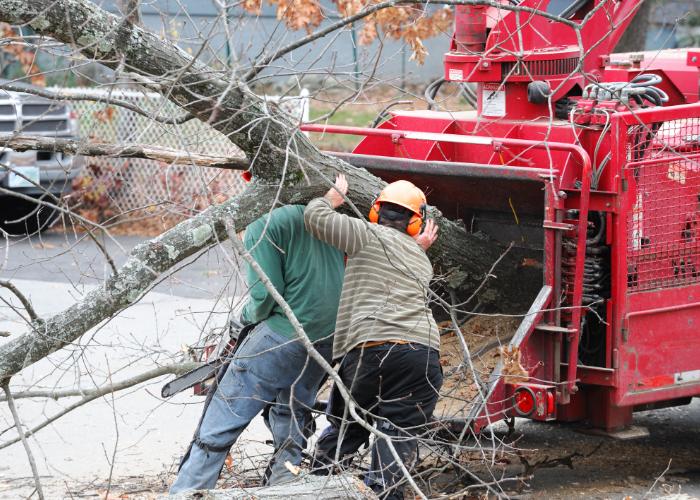
If you need fallen tree removal on your property, note who to call and what to do next:
If you cannot manage tree removal safely, it’s time to call a professional. A tree removal company quickly cuts larger trees into manageable pieces.
Also, professional companies have access to woodchippers and other means of disposal. Their price is worth the investment if it means safe removal and clean property.
The best way to deal with needed fallen tree removal is to avoid this issue in the first place! There are a few ways you can reduce the risk of fallen trees on your property or a neighboring property:
Lastly, remember that regular inspections and trimming ensure tree health. An arborist can recommend better soil irrigation, disease treatment, etc. Your trees will grow strong and healthy, and you’ll reduce the risk of them falling unexpectedly.
Springfield Tree Trimming & Removal Service is happy to provide this information about fallen tree removal responsibilities. Hopefully, you found it helpful, but remember to speak to an attorney for precise legal advice. In the meantime, call our Springfield tree removal contractors if you’re in the area and need a FREE quote. We offer trimming, pruning, full removal, stump grinding, and land clearing. We’re fully licensed and insured, so call us for more information today.
Are you a property owner asking how to stop a tree stump from sprouting? This is a vital question because trees can grow back from new stumps. So, if you don’t have the stump removed, keeping it from sprouting means not having that tree regrow. Additionally, fresh sprouts often make a stump look very unsightly and unkempt.
The good news is that you can also stop those sprouts from forming and spreading. In turn, you won’t need to deal with a tree you don’t want on your property! Check out some tips for stopping a tree stump from growing new sprouts. Also, discuss this with a tree services contractor near you as needed if you need tree stump removal.

When reviewing these tips on how to stop a tree stump from sprouting, always remember safety first! Never use any chemicals without proper eye protection and thick gloves. Also, ensure you have fire extinguishing materials nearby as well. Lastly, if you suspect these tips are beyond your area of expertise, call a tree services contractor for stump grinding!
As with full-grown trees and other greens, stumps need sunlight, water, and air to grow. You can typically stunt its growth with a thick, dark tarp. Place the tarp over the stump and secure it with duct tape or adhesive.
Leave the tarp on the stump continuously for at least six months. After this time, the stump’s roots should have died entirely away. If the stump has sprouted, put the tarp back over it and leave it for several more months to kill tree stumps.
Strong fertilizers damage tree stump roots to the point of decay. To use this method, cut the stump down to soil level or as close as possible. Then, drill several holes through the stump face until you penetrate the soil.
Next, pour slow-acting fertilizer into the drilled holes. Cover the stump and its drilled holes with soil and pack this dirt into the holes. Leave the stump untouched for several months. Afterward, the fertilizer should kill its roots and any developing tree stump sprouting.
Instead of fertilizer, you can use rock salt or Epsom salts to kill stump roots. Most hardware stores carry rock salt in the lawn care section to melt snow. You can typically find Epsom salts in the personal care section of most stores, as people often dissolve these in baths!
To use either material, drill through the stump as you would when using fertilizer. Pour the salt into the drilled holes and then pack soil into the pits over the salts. Again, cover the stump with a thick tarp or trash bag and secure it into place. Leave the stump for several months for the best results.
Before burning a tree stump, check with your city or county and ensure this process is legal! If so, you also want to have a garden hose or fire extinguisher on hand. Finally, remove any leaves and twigs from around the stump, and keep children and pets away from the area.
To burn the stump, drill holes through the face until you reach the soil. Next, pour kerosene into those holes and let it saturate the stump and its surrounding roots. Then, add some firewood and twigs to the top of the stump, as you would when building a campfire.
Light the firewood and twigs and keep feeding the fire as needed, to ensure it reaches the kerosene below. Once you’re sure the stump has burned out, extinguish the blaze and replace the ashes with soil. Finally, cover the stump with a thick tarp to keep it from regrowing.
There are other methods to stop tree stumps or even for killing stumps but this may include buying equipment such as a stump grinder or buying a stump killing herbicide. Some known chemicals on the market include an active ingredient of potassium nitrate (or saltpeter) or sodium hydroxide. So look for those active ingredients when you're buying stump killing solutions.
When dealing with a tree stump you don’t want to grow back, remember that trees need leaves for growth! Leaves take in needed oxygen and sunlight, which feeds a tree and allows it to thrive. In turn, cutting away leaves and developing sprouts reduces the chance of tree regrowth.
If you don’t want to destroy a tree stump using the methods above, preventing new sprout growth is the next choice! You can snip them as they sprout, which helps stop the stump from growing. Also, consider spraying them with a vinegar and water mixture once they appear. The vinegar keeps them from flourishing, which also keeps the tree stump from thriving.
In some cases, you might do well removing tree stumps instead of trying to keep it from growing. Check out when and why removing a tree stump is best for a property:
Springfield Tree Trimming & Removal Service is happy to help answer the question of how to stop a tree stump from sprouting. Hopefully, you found this information helpful! If you’re ready for expert services on your property, call our Springfield tree services contractors. We offer free consultations and price quotes, and guaranteed services. For more information, contact us today!
Planning tree removal, is not always an easy decision. After all, trees offer shade, fresh air, and a welcoming appearance for a property. Also, mature trees often increase property values and help protect lawn and landscaping features from harsh sunlight. Consequently, why would a property owner want to remove those trees?
While it’s often beneficial to have trees on any property, this isn’t always true for every tree! In some cases, tree removal might improve your property’s safety and appearance and reduce the risk of damage. Check out what this means and 5 reasons why tree removal services can potentially increase your property’s value overall.
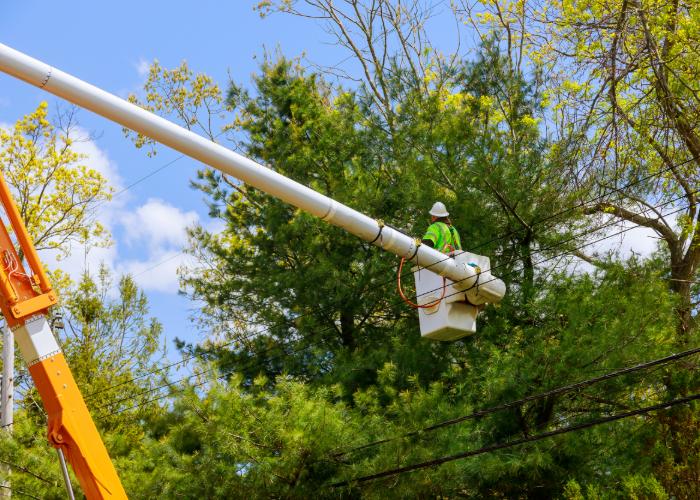
Encroaching branches, meaning those getting too close to something nearby, risk costly damage! Overgrown branches can pull down power lines or scrape roofing materials, windows, and exterior walls.
However, constantly trimming those branches means facing that expense year after year. On the other hand, tree removal means not risking property damage or having to manage the hassle of constant pruning. Consequently, consider removing a tree if it has bothersome, encroaching branches risking property damage.
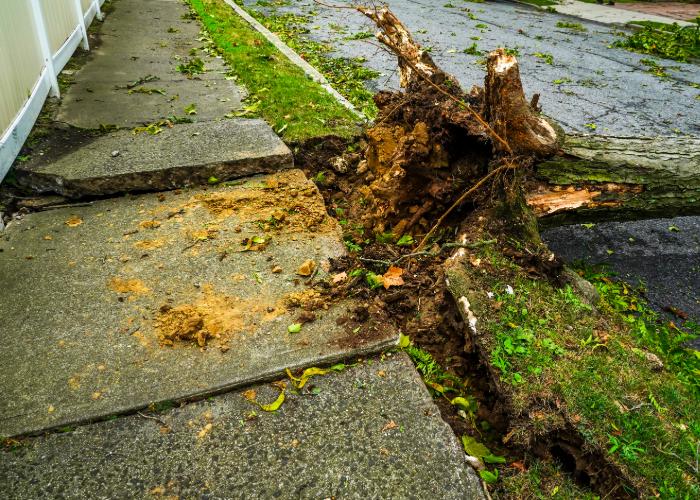
Along with branches, tree roots might grow so much that they risk damaging property around them. For instance, those roots might wrap themselves around underground plumbing pipes or a septic tank. Also, they can reach nearby foundation concrete, footings for fences, and other building materials.
As roots grow, they expand and then squeeze around these features. In turn, those roots might crack or otherwise damage pipes, foundations, and anything else in their way! In some cases, a tree services contractor can redirect or trim those roots. If not, tree removal can protect against this damage and protect your property’s values overall.
While mature trees offer lots of visual appeal, they can sometimes block your view of the horizon or other features. For instance, trees might cut off your view of a nearby lake, park, hillside, and the like. In turn, removing those trees means a more attractive property overall. Consequently, your property might be more valuable after tree removal than if you leave those trees on your lot.
Damaged or decaying trees can detract from your property’s appearance. Also, some trees are just downright unattractive! As an example, sandbox trees grow thorny spikes along their trunk, which make them dangerous and unsightly. While these trees are more common in tropical areas, there are some in the area!
Also, note that some trees produce messy fruit and other droppings. For instance, mulberry fruit is sticky and stains many surfaces and materials. A mulberry tree on your property can mean unsightly marks along your home, garage, fence, and even your lawn! For these reasons, consider removing trees that create an unattractive appearance to your property.
If you’re thinking of selling your property, consider that buyers might want to make changes to its exterior. These changes might include adding new landscaping, a pool, a garden, and so on. For commercial properties, a new owner might want to expand a parking lot or add traffic lanes.
However, too many trees can get in the way of those plans. Also, they can make it difficult for buyers to appreciate your property’s size. Consequently, having too many trees can lower your property’s value rather than increase it.
On the other hand, clearing out some trees can make a lot seem larger. Additionally, it can allow prospective buyers to visualize those planned improvements. A real estate agent can help you decide what trees to save or keep, to open up your property’s exterior!
Not all trees increase property values, as said. However, many tree species make a yard more inviting and offer other amazing benefits, including shade and moisture retention. Trees also clean the surrounding air and provide a home for beneficial wildlife.
With that in mind, you don’t want to have a property without any trees! First, choose native tree varieties that grow easily in your local climate and survive harsh winters. Second, ensure you choose trees proportionate to your lot overall.
For instance, maple and oak trees grow more readily in the state’s changing seasons and long, cold winters. However, these might grow too large for smaller lots. In those cases, consider dogwood, buckeye, or crabapple trees. Also, ask a tree services contractor for recommendations when it comes to your property.

Some experts state that trees can increase property values by up to 15% or more! That’s an extra $15,000 for every $100,000 in property values. However, remember that this isn’t always true for every property. You don’t want to overwhelm your lot with trees or plant a species that might struggle to thrive.
On the other hand, remember that trees do more than just increase property values. For instance, they provide shade for you, your pets, and your lawn! Without enough shade, delicate grass blades and landscaping features can wither easily.
Also, note that trees help clean surrounding air and give off oxygen. This process helps improve your property’s air quality. Additionally, while overgrown roots might damage buried features, they also help keep moisture in the soil. This also helps keep grass and landscaping features healthy year-round.
Springfield Tree Trimming & Removal Service is happy to provide you with this information about tree removal. Hopefully, you found it helpful and useful for deciding what to do about trees on your property! If you still have questions or know it’s time for pruning and other care, call our Springfield tree services contractors. We offer expert services at prices you can afford! To find out more or to get your property started with needed tree care, call today!
Getting the right tree removal company in Springfield can be challenging. However, it can be more expensive if you don’t adequately vet the tree removal contractor that you choose. If someone who isn’t professional removes your tree, this may save you in the short term but cost you big in the long term, fixing the problems they’ve caused.
For instance, you may have to pay a fine for them removing a tree without proper permits. Or, you may have to pay to fix the property that the tree destroyed by falling because they didn’t remove it carefully. Therefore, it is a good idea to make sure that the arborist you hire is from the most qualified tree removal company in Springfield.
You should do your due diligence and ask as many questions as possible before committing to your final candidate. But here are some of the most important things that you should try to learn about the company with which you want to do business.
Before you proceed with choosing from the many tree removal companies in Springfield, it is a good idea to make sure that the candidates that you choose have a license and proper certifications. Tree care and removal require a high level of skill. Randomly cutting branches off of a tree can risk long-term damage to the tree and could even cause the tree to die. Topping a tree can also cause damage to a tree that can result in cutting off a tree’s food source and making the structure unsafe.
If a tree dies or is not safe structurally, it is more vulnerable to collapse, particularly after a storm. This could cause massive damage to your property or your neighbor’s property. So, it’s a good idea to make sure that the company has a license and is able to properly trim, prune, and perform removal services so that you don’t run the risk of having the tree company damage your property and leave you to pay for it.

Another important thing that you want to learn is whether the company has insurance. Tree removal is hazardous, and the risk of an arborist falling and sustaining an injury is very high. If the arborist from the company gets injured while performing tree services for you and is not insured, you may be responsible for the medical bills incurred by the arborist. Unfortunately, you may also be liable for the damages they cause in the process. Therefore, a tree company should at least have general liability insurance and worker’s compensation insurance so that you won’t have to be financially responsible for the injuries they receive or damages that they may cause while removing your tree.
When working with a tree service company, you also want to work with a company that has an excellent reputation. The way to gauge whether the company does credible work is to check out reviews. What are their customers saying about their work? You can find this info on their site or third-party sites, particularly contractor websites. You may even be able to check the Better Business Bureau to find out the latest info about the company. Another great source is referrals. If your family or neighbors recently used their services and are happy with them, their word-of-mouth referral may make them a good choice.
Choosing a reputable tree company can be a lot of work. However, doing a lot of work upfront can save you a lot of money and headache in the long term by minimizing your chances of choosing someone that isn’t credible. Another great way to know that you are working with a quality tree company is by getting a written estimate. A written estimate is much more professional, and it details all of the issues that they plan to address, the costs, and the timeline for completion. In addition, written estimates are something you can use to compare all of your final candidates to determine the variations in costs and ask final questions on why there are price variations.

As a rule of thumb, you should get an estimate from at least three tree companies you are considering. Scrutinize the estimates and use them as a means to make your final decision. Choosing the cheapest option may not always be the best option. If one of your choices is charging a higher cost, make sure you understand why. Perhaps the higher price may be to haul the tree and its debris away or stump grinding. It is essential to know what you are getting and what you are not getting with your final choices.
When choosing a qualified tree company, you really should do your best to research them. What you don’t know may hurt you financially if you choose the wrong tree company. If you need a qualified tree company in Springfield, the tree experts at Springfield Tree Trimming and Removal Service can help. Feel free to contact them today to learn more about their general tree services or get a FREE quote on tree removal in Springfield.
