
Trimming trees in winter can be controversial. Some experts say it's perfectly fine or even beneficial to prune deciduous trees during winter dormancy. Others argue that winter pruning stresses trees and exposes them to disease and insects.
So what's the real answer - can you trim trees in the winter? You can trim trees in winter, but trees are more vulnerable to infection and damage from extreme weather when dormant. It's best to prune only smaller branches and avoid heavy structural pruning until late winter or early spring when the tree is more resilient.
Let's explore the pros and cons.
There are several potential advantages to pruning deciduous trees in the winter:
With leaves off the branches, you have better visibility and access to trim the tree structure. This allows for more precise tree pruning cuts.
Sap flow and risk of disease transmission are much lower when trees are dormant in winter. Pruning wounds also dry out faster.
Winter pruning stimulates bud growth when warm weather returns, leading to lush foliage come springtime. The lack of leaves allows sunlight to reach previously shaded buds on the inner branches and tips, signaling the tree to direct nutrients there when growth resumes.
Deciduous trees produce biochemical growth hormones just prior to budding, which dispersal is aided by pruning. Cutting branches causes a spike in auxin levels, which stimulates cell division and elongation. This results in a flush of vigorous new shoots and leaves from stimulated buds in the spring.
Pruning also removes older branches that may inhibit nutrition and development of new wood and foliage. The right winter pruning clears space for fresh branches to grow into rather than competing for light and nutrients. Proper technique promotes renewed branching rather than allowing old wood to dominate the canopy.
Trimming in winter allows you to avoid disrupting nesting birds and baby squirrels who take shelter in trees during spring and summer. This prevents accidentally destroying existing nests.
Deciduous trees in winter hibernation are able to compartmentalize pruning wounds and recover from stress more easily with their resources focused internally rather than on new growth.

However, pruning in frigid months does come with some downsides to consider:
When leaves are absent, it can be tricky to tell which branches are healthy or damaged. This makes selective pruning more difficult for the average homeowner.
Removing branches in winter exposes the tree to harsh elements like cold, wind, ice, and snow. Main stems may suffer frost cracks or sunscald damage without small branches for protection.
The large, open wounds created by pruning have elevated risk of disease and fungal infections in wet winter weather. When dormant, a tree's ability to defend against pathogens and compartmentalize injuries is diminished.
Cuts expose the inner bark, sapwood, and heartwood to external elements. This provides entry points for decay fungi and canker bacteria during a time when trees cannot form callus tissue or vascular connections to isolate infections.
Standing water, rain, snow, and higher humidity also increase vulnerability in winter. Wet conditions leach protective chemicals from exposed wounds while facilitating the spread of decay organisms through splashing and transport.
Trees have less time to recover before spring growth starts. Failure to close wounds quickly may impact vigor or lead to long-term weak spots on the tree.
Heavy snow or ice accumulation can cause weakened branches and sterns to break under pressure. The additional weight stresses the tree at its weakest time of year.

There are good arguments on both sides of pruning trees in winter. Some compromise positions argue that very early winter or late dormancy is preferred over mid-winter. Sheltered backyard trees may also tolerate winter pruning better than exposed street trees. Ultimately, there are many factors that come into play regarding the tree's health and circumstances. Careful consideration is warranted if removing significant branches during freezing months. Many experts recommend leaving structural pruning until late winter or early spring when possible.
About Springfield Tree Trimming & Removal Service
Springfield Tree Trimming & Removal Service is a locally-owned tree care company serving the local area for over 10 years. Our team of ISA-certified arborists expertly trim, prune, and remove trees of all sizes using advanced techniques and equipment. We handle everything from seasonal cleanups to emergency storm damage response 24/7. Contact us today at (217) 302-9494 for reliable arborist services to maintain the beauty and safety of your landscape.
What months should you not trim trees?
You should avoid trimming trees during the early spring months when they are budding and flowering. Pruning trees in April and May can significantly reduce their blossoms and fruit production that season. It's also best not to prune trees late in the growing season, around August and September, as this can stimulate new growth that won't have time to harden off before winter dormancy. The optimal time for trimming most trees is during June, July, and the cooler months of winter while the trees are dormant and resilient. Limit pruning that damages maple and birch trees, specifically in the winter, to prevent them bleeding sap.
What temperature is too cold to prune trees?
It's best to avoid pruning trees when temperatures drop below 20°F (-6°C) as the extreme cold can shock the tree and damage exposed tissue. While dormant trees are resilient to pruning in normal winter weather, trimming branches when it's extremely frigid out can harm the tree's health and make it vulnerable to infections.
Are tree branches more brittle in winter?
Tree branches do tend to become more brittle and prone to cracking during winter dormancy due to internal physical changes. The starch content in twigs and small stems is converted to simple sugars as an adaptation to survive cold and minimize freeze damage. However, the conversion weakens the cell structures, making branches more likely to snap, especially evergreens weighted with snow and ice. To prevent breakage, arborists recommend pruning selectively rather than heading or stub-cutting branches and avoiding climbing or working trees in icy conditions when limbs are extra fragile. Protecting stands of brittle trees from heavy snow using shake-off devices can also reduce the chance of stem fractures.
Do trees heal in winter?
While growth processes pause during winter dormancy, trees are still capable of compartmentalizing wounds and initiating some healing internally. However, the closed conditions caused by dormant season pruning delay callus tissue formation and wound closure until active growth resumes in spring. Though trees compartmentalize pruning cuts more slowly in winter, refraining from trimming broken branches enables ice and snow to exacerbate cracks. Making clean removal cuts promptly can aid a tree’s winter recovery rather than leaving it vulnerable to worsening damage for months until it reactivates in spring. Still, most structural pruning that requires healing is best left for early spring when rising temperatures spur rapid wound response.
When was the last time you scheduled tree trimming in Springfield, Missouri? If it’s been a few years, you might consider making that call! Pruning and trimming keeps trees healthy while also protecting surrounding property from damage.
Additionally, a healthy trim can mean added sunlight and fresh air circulation around your property and that tree! Note that a tree care contractor can offer personalized suggestions for your property’s trees and their condition. In the meantime, check out some signs that it’s probably time for tree trimming in Springfield.

There are many reasons to trim away broken branches from a tree. One, that branch can snap and fall at any time, risking injury or property damage. Two, that damage can indicate a disease or infestation that might spread to the rest of the tree.
Also, consider that broken branches detract from a tree’s overall appearance! They might also be putting pressure on other branches, risking even more breakage. For all these reasons, have broken branches trimmed at the first sign of damage.
Tall, thick trees offer lots of shade to the property below and create a stunning appearance on your property. However, too much growth is not a good thing! Overly thick branches might block too much sun on your property. In turn, grass and landscaping might wither and struggle to grow.
Additionally, overly tall trees might block skylights, solar panels, and roof vents below. They can also block your view of the horizon! If you cannot see through a tree’s branches, it’s probably too dense and thick. To avoid these issues, don’t hesitate to trim that tree’s crown and branches as needed.
Cracks along a tree’s bark and spots of missing leaves usually indicate tree disease or infestation. If left untouched, these can spread and affect the rest of the tree. Also, note that diseased and infested branches are often weak and prone to cracking. In turn, they might snap off the tree, often without notice!
In addition to missing leaves, note that discolored leaves can also indicate disease or pests. Additionally, fungi can often affect the appearance of leaves. If you notice any of these issues with a tree, have an arborist check it for needed trimming or removal.
Crossing branches might provide some interesting aesthetics but it’s best to remove them quickly! Those branches can’t thrive and are likely to wither and die, sometimes taking other branches with them. Additionally, they become weak as they wither, which increases the risk of them cracking and falling.
Moreover, it’s vital that you schedule trimming quickly, as these branches get weaker the more they grow. This also increases the likelihood that they’ll snap and fall. An arborist can explain these risks in even greater detail.
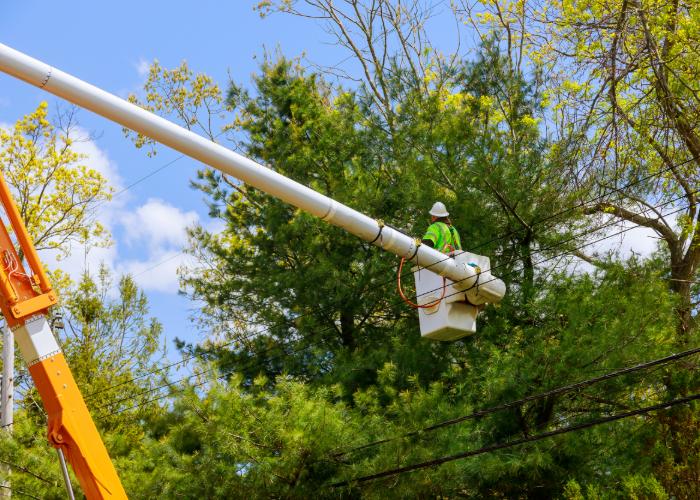
If you don’t prune a tree, you might risk falling branches. These can land on homes, garages, cars, fences, and anything else below, risking costly damage. Also, a falling branch can mean injury and even death to anyone in the vicinity.
Additionally, consider that not pruning a tree as needed can mean too much weight on one side. This can risk weakening the tree and uneven growth over the years. Moreover, overly thick branches can choke sunlight and fresh air circulation, which trees need to grow! Too much shade can also affect grass and landscaping features, as said.
Lastly, it’s vital that a property owner remove diseased or infested branches or trees themselves. Tree diseases can spread throughout a tree or to other growth. Additionally, pests can make their way to nearby homes or commercial structures. Removing infested branches, trees, and stumps then protects your property from costly damage.
Tree trimming is important for a few reasons. First, it helps to keep trees healthy by removing dead or diseased branches. Second, it prevents branches from interfering with power lines or other objects. Third, it helps to maintain the overall appearance of a tree. Finally, tree trimming can help to improve the safety of a property by removing any potential hazards. If you require any tree trimming services, please contact your local arborist.
Property owners might have an arborist inspect trees on their lot every few years, checking for needed trimming. However, schedule an inspection right away if branches are getting too close to overhead wires or nearby roofs. Also, consider if high winds might push those branches into nearby features, risking damage.
Additionally, schedule an inspection for potential trimming after strong storms. High winds, heavy rain, sleet, hail, and other inclement weather often risk damage to branches. Trimming them before they snap protects your property and those trees as well!
Springfield Tree Trimming & Removal Service is happy to provide you with this information about tree trimming in Springfield, Missouri. Hopefully, you found it helpful when it comes to your property! If you’re in the market for expert, reliable services, call our Springfield tree care contractors. We provide FREE quotes and guaranteed satisfaction. To get your property started, use our contact form or just give us a call!
